
Phase 1: January-May 2024 | Phase 2: August 2024 –
Challenge: How can we design a campus tour experience at CMU that effectively engages and meets the needs of visiting students and parents with language accessibility requirements?
Role – Project Manager, UX Researcher
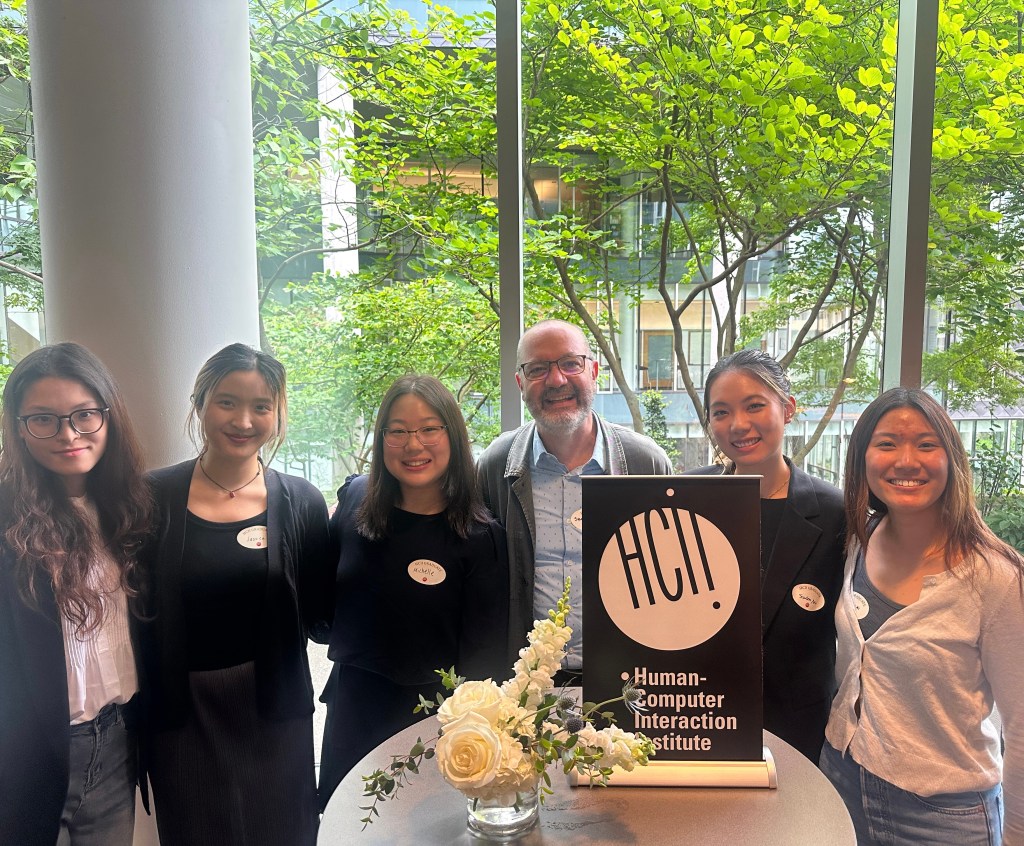
Team – Sijia Fan, Michelle Jia, Huarui Lai, Jessica Lai, Scarlett Mo
Project Overview
This project was for my senior year BHCI capstone project, where my team and I worked together to design a solution for our client.
Student campus tours serve as a crucial service for prospective students and families to learn about the university’s culture. However, these experiences can pose barriers for multilingual families, as students often find themselves occupied with translating for their parents, which hinders their ability to fully engage with the tour. To address this challenge, this project sought to design a tour experience that prioritizes mobility, accessibility, and equity. By transforming the linguistic landscape of the institution, this project also aims to foster a sense of belonging among all visitors, regardless of language barriers.
Carnegie Mellon University’s demographic data presents a predominantly international student population. Despite this demographic, CMU’s guided tours currently do not provide equal language accessibility to all visitors. Our project sought to fill this gap by designing a tour experience tailored to the needs of multilingual families, thereby enhancing the inclusivity and effectiveness of CMU’s campus tours.
Research
The first phase of our project was conducting sufficient research to better understand our stakeholders, the project scope, and the current resources available to CMU visitors. We first identified several areas of focus for our research, and then formulated research questions to address those areas:
- Experience Gaps: What are current pain points faced by non-native English speakers when experiencing CMU campus tours?
- Modes of Delivery: What modes of delivery for a campus tour are maintainable and feasible for CMU to implement and would be well-received by users?
- Cultural Context: Do the answers to these focus areas differ for people of different cultures and speakers of different languages?
The research methods that we used included a competitive analysis on 11 existing multilingual tools, an observational study of 2 CMU campus tours, and surveying 72 CMU students.
The competitive analysis was meant to help us evaluate how existing multilingual tools (for universities, museums, etc…) translate content for users. There were many different formats, such as visual guides, auditory translations, or in-person translated tours.
To better understand how the current CMU campus tours worked, as well as the visitors’ main focuses, we conducted an observational study by going on two CMU campus tours. This allowed us to experience the possible limitations for multilingual visitors and see how we could address those limitations.
Finally, we conducted a survey in order to gain insight into the language demographics of CMU students and parents, as well as the potential pain points in translation behaviors. The survey was distributed to various internal student associations, where we got 72 responses. Through this survey, we learned about students’ experiences with translating for parents, as well as their preferences regarding multilingual tools.
By the end of the initial research phase, we synthesized our results into 4 main insights:
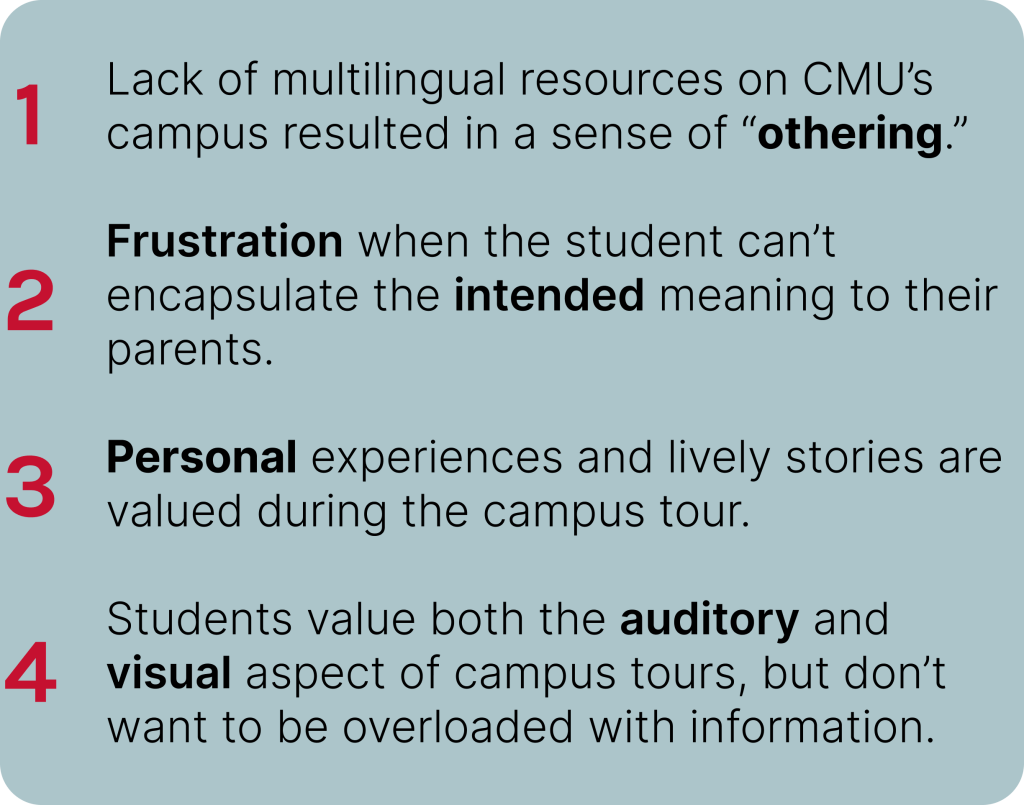
Therefore, our initial problem statement was as follows:
How might we design a comprehensive and accessible tour solution that meets the needs of multilingual visitors to CMU’s campus?
Ideation
In our initial ideation phase, we conducted a quick session of Crazy 8’s to generate ideas based on our research insights. We then started mapping these ideas out to see which ideas leaned more towards user needs vs. client needs, audio vs. video-based solutions, low vs. high degree of personalization, and whether the focus of information was on institutional facts or school culture.


From the Idea Mapping, we identified four main considerations to keep in mind as we continued building our storyboards to test with users:
- Multimodality (Audio vs. Visual)
- Amount of Personalization
- Main Targeted User (Tartan Ambassador vs. Parents)
- Focus of Information (Student Life vs. Academics)
Storyboards

Our team came up with 6 storyboards to present and test with our main stakeholders: parents. With the storyboards, we considered how we can emphasize multilingualism before and after the physical CMU touring experience, not just during. Parents were asked to rank these ideas and give feedback on what they liked and disliked about each idea.
The final result of this initial storyboard testing was that majority of parents liked the CMU Campus Life Flip-book and the Food Map. Here were some insights we gathered from this stage:

Pivoting
After finishing our low-fi storyboard testing with our target stakeholders, we made a huge discovery.
What we were envisioning and scoping out had already been built, but without the multilingual component (shown below).


The first image shows an interactive screen in the Tepper School of Business, where the Coulter Welcome is for visitors to start their CMU campus tour. This screen displays an interactive map of CMU, equipped with information and labels about buildings, food locations, and other facilities of CMU.
As we looked further into this existing tool, we concluded that this app was mainly for self-guided tours. We also realized that there was very little promotion and marketing of this tool, because it had taken us weeks to come across it.
The second set of images show a CMU printed map, available in the Welcome Center. This map contains a QR code to scan to land on the tool’s website. After analyzing the interface of this tool, we discovered that there could be many areas of improvement in the user experience as well, such as easier navigation and cleaner designs.
Thus, we formulated a more focused design question to guide the rest of our project progress:
How might we use our findings and insights thus far to create a solution that distinctly adds value to the existing CMU tour experience?
Prototyping
For our prototyping phase, we talked with our client and established their needs along with parent needs/wants, and decided what we should focus on incorporating in our final design.
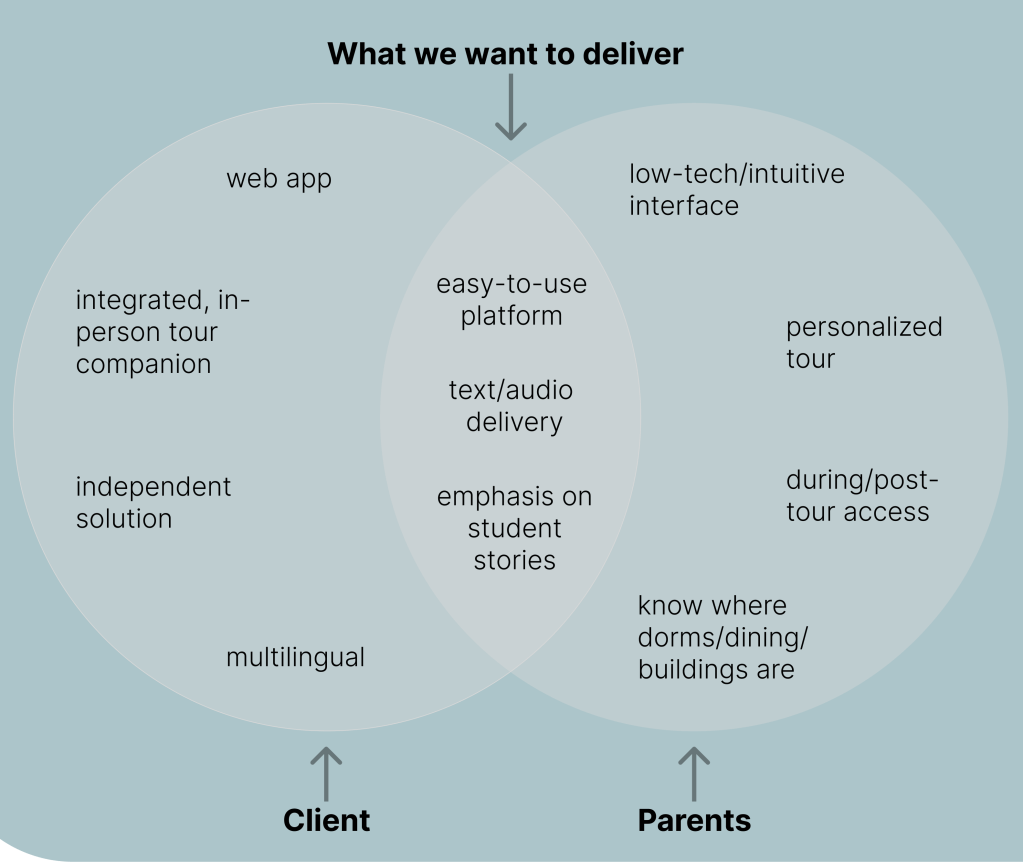
Our mid-fi design focused on the most important information necessary for prospective parents and students: multilingual stories from current CMU students.
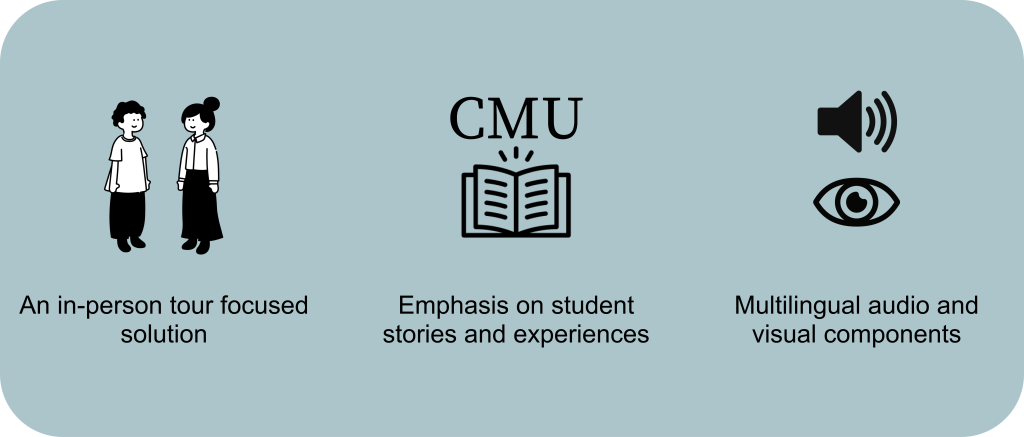
Given that parents would most likely be accessing this platform through their mobile devices, we ensured our user interface conveyed its intended meaning whilst being conscious of screen space and not overloading the user with visual content. Thus, we wanted to distinguish this mid-fi prototype from CMU’s existing platform through three key factors:
Mid-Fi Testing
We tested with parents by presenting 3 key flows of the web app to them. The key goal was to see how much customization and personalization parents sought, as compared to being able to explore a collection of student stories on their own accord.

Parents expressed liking being shown tailored students stories at each stop, and also having the opportunity to freely explore the collection of students stories should they want to hear more about CMU. Many parents ranked the Custom Preferences prototype the lowest, because it required too much mental effort and time to get through. Parents emphasized their values of simplicity and intuitiveness, and a short onboarding process facilitated that.
Thus, we decided to merge the Related Stories and Free Navigation concepts into a final prototype.

Final Deliverable

We created this user journey flow in order to better illustrate how users would be using our tool. From our previous research and observations, we found that the time between each tour stop is often less utilized by visitors, especially those who are not fluent in English. Therefore, we decided to use this time between tour stops to give visitors more personalized stories of student experiences.
- At stops, users can hear the translated transcripts of the tour in their preferred language.
- Between stops, users can use the storytelling component of our app to get even more information about student life at CMU.
Here are the features of our final design:
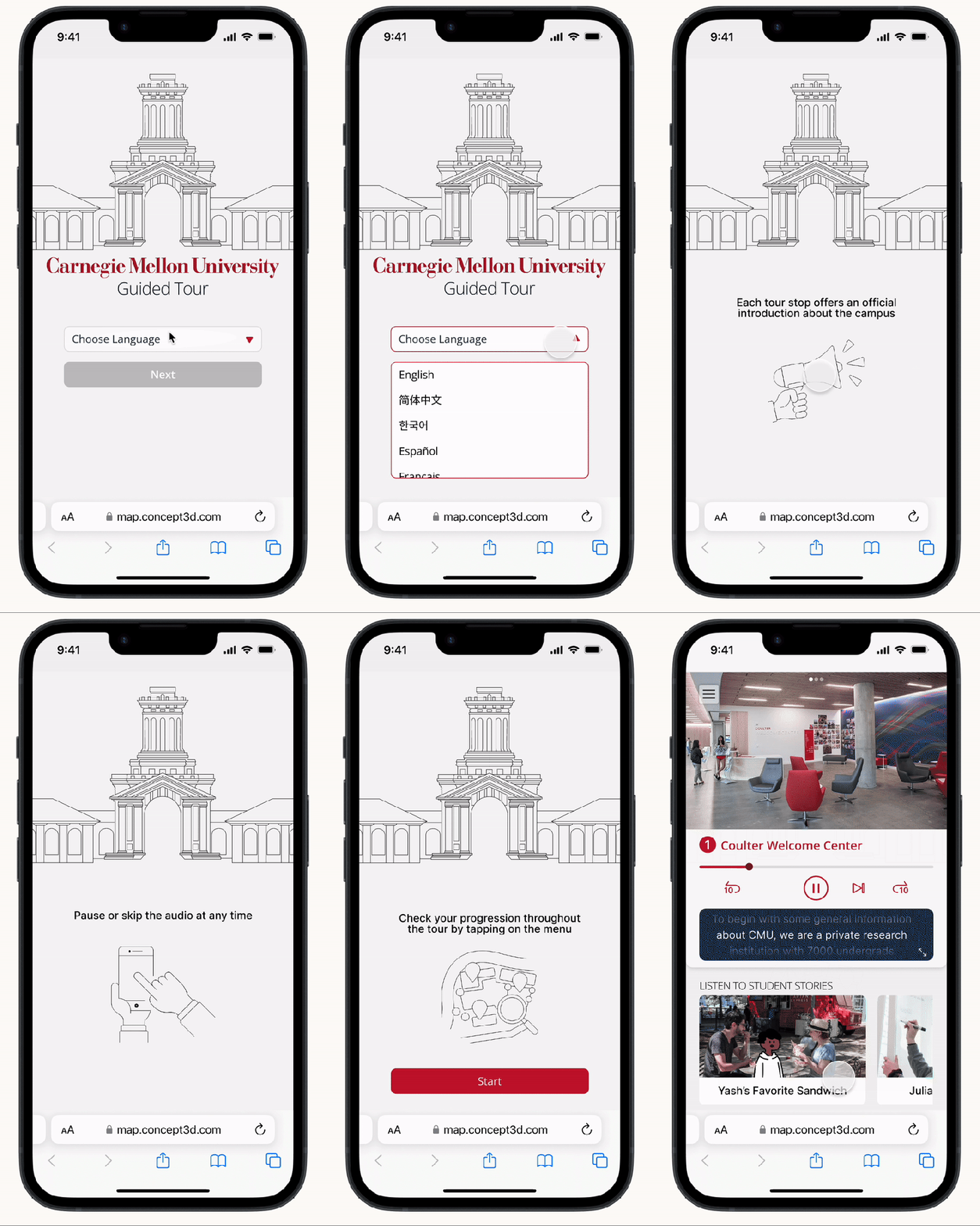
The first feature of our final design is the onboarding process, used to introduce the app’s basic features and functions to users.
The language selection bar allows users to choose the language they want to experience the tour in.
This feature was included in order to allow for an easy-to-navigate and simple app interface, presenting the necessary information using visual cues.

The next feature is the student story collection. This is organized in a way that presents related stories to each tour stop, so that users can easily navigate and find what they want to listen to.
There are numerous stories to select from!
We included this feature because a common finding from our research and testing was that campus visitors value hearing authentic stories and experiences from current students.

The final feature in our prototype is an expandable and automatic scrolling transcript to match the audio speed. This allows for more support and flexibility for users who prefer visual vs. auditory learning.
From our research and testing, we found that users have different preferences on how they receive information, so this feature was implemented to meet those different needs.
Here’s a video showcasing the final design of our multilingual tour app and demonstrating how it can be used by students and parents to enhance their campus visit experience:
Next Steps

Our next steps focus on gathering additional student stories and expanding the tour to include more language options. By incorporating a wider range of experiences from CMU students and offering more language options for the tour, we aim to foster a more inclusive campus environment.
We were pleased to present our design solution to CMU’s Communications & Marketing division, where it was met with positive feedback. We are currently collaborating with the university to develop a fully functional web app based on our design, with the goal of integrating it into live CMU tours. As we continue testing and refining the app, we look forward to leveraging this platform to further improve the user experience and support the diverse needs of campus visitors.
In the future, we would also consider adding a geo-locative feature, so that our solution could standalone as a self-guided tour tool.
Reflection
Working with this team throughout my senior spring semester (and continuing after graduation) was an incredible experience! As we all came from multicultural and multilingual backgrounds, this project was close to our hearts. Not only were we able to channel our own experiences and passion into designing this tour experience, we were able to see how it could positively impact so many others from diverse backgrounds. While the focus of this project started off with meeting multilingual needs, we realized that there so many other factors to consider with visual and auditory needs.
Speaking to students and parents about their own experiences with campus tours helped us to gain more perspective and empathy on what they valued most. In the end, our solution was able to balance both the multilingual needs as well as the engagement of the campus tour experience!
 Michelle Jia